Circadian Lighting 101: Why Your Bedroom Needs the Loftie Lamp
Your body has an internal clock that's been running for millions of years. It knows when to wake up, when to wind down, and when to sleep. The problem? Modern life is constantly messing with it.
Bright overhead lights at 10 PM. Blue-enriched screens right before bed. Dark mornings when you're trying to wake up. Your circadian rhythm is getting mixed signals, and it's showing up as poor sleep, low energy, and that wired-but-tired feeling that's become way too familiar.
Enter circadian lighting. It's not just about having a lamp. It's about having the right light at the right time, working with your biology instead of against it.

What Is Circadian Rhythm (And Why Does It Matter)?
Your circadian rhythm is your body's 24-hour internal clock. It regulates sleep-wake cycles, hormone production, body temperature, metabolism, and even immune function. It's controlled by a tiny cluster of cells in your brain called the suprachiasmatic nucleus (SCN), and its primary cue is light.
When light hits your eyes, it sends signals to your SCN, which then tells your body whether it's time to be awake and alert or time to wind down and sleep. Natural sunlight is the ideal signal. Bright and blue-enriched in the morning to wake you up, warm and dim in the evening to help you relax.
The problem is that most of us aren't living by natural light anymore. We're inside all day under artificial lighting, staring at screens that blast blue light well into the night. Your brain gets confused. It doesn't know if it's noon or midnight, so your circadian rhythm drifts out of sync.
How Light Affects Melatonin (Your Sleep Hormone)
Melatonin is the hormone that makes you feel sleepy. Your body starts producing it in the evening as light levels drop, peaks around 2-4 AM, and then decreases in the morning as light increases.
Here's the catch: blue light (the kind emitted by phones, laptops, and most LED bulbs) suppresses melatonin production. Studies show that exposure to blue light in the evening can delay melatonin release by up to 90 minutes and reduce overall melatonin levels by more than 50%.
That's why scrolling on your phone at 11 PM makes it so hard to fall asleep. Your brain thinks it's still daytime. Melatonin stays suppressed. Your body doesn't get the signal to wind down.
On the flip side, warm, dim light in the evening supports melatonin production. It signals to your brain that the day is ending and it's time to transition into rest mode.
What Makes the Loftie Lamp Different
The Loftie Lamp is designed specifically to support your circadian rhythm. It's not just a bedside lamp. It's a lighting system that adapts to what your body needs at different times of day.
Warm Dimmable Light for Evenings
In the evening, the Loftie Lamp offers warm, amber-toned light that's free of blue wavelengths. This supports natural melatonin production and helps your body transition into sleep mode. You can dim it as low as you need, creating a calming environment that signals rest.
Research from Harvard Medical School found that people exposed to warm, dim light in the evening fell asleep faster and reported better sleep quality compared to those exposed to bright, blue-enriched light.
Bright Reading Mode for Tasks
When you need focused light for reading or tasks, the Loftie Lamp has a bright mode that provides clear, functional illumination. It's not about eliminating all bright light. It's about having the right light when you need it and being able to switch to sleep-friendly light when you don't.
Sunrise Alarm Feature
One of the coolest features is the sunrise alarm. The lamp gradually increases light intensity over 30 minutes to mimic natural dawn. This gentle wake-up method helps suppress melatonin naturally and increases cortisol in a healthy way (not the stress spike you get from a jarring alarm).
Studies on light-based alarms show they improve mood, increase alertness, and reduce grogginess compared to traditional sound-only alarms. You're waking up the way your body is designed to wake up.
No Blue Light in Evening Modes
The Loftie Lamp eliminates blue light in its evening settings. This is huge. Most lamps and overhead lights emit blue wavelengths even when dimmed. The Loftie Lamp is specifically engineered to filter them out, giving you true circadian-friendly lighting.

The Science of Light Temperature
Light is measured in Kelvin (K). Lower numbers are warmer (more red/orange), higher numbers are cooler (more blue/white).
- 2000-3000K: Warm, amber light. Supports melatonin production. Ideal for evenings.
- 3500-4500K: Neutral white. Good for general tasks during the day.
- 5000-6500K: Cool, blue-enriched light. Suppresses melatonin. Great for waking up, terrible for bedtime.
Most overhead lights and screens fall in the 5000-6500K range. That's why they're so disruptive at night. The Loftie Lamp lets you control the temperature, giving you warm light when you need to wind down and brighter light when you need to focus.
Pairing with the Loftie Clock for Complete Sleep Optimization
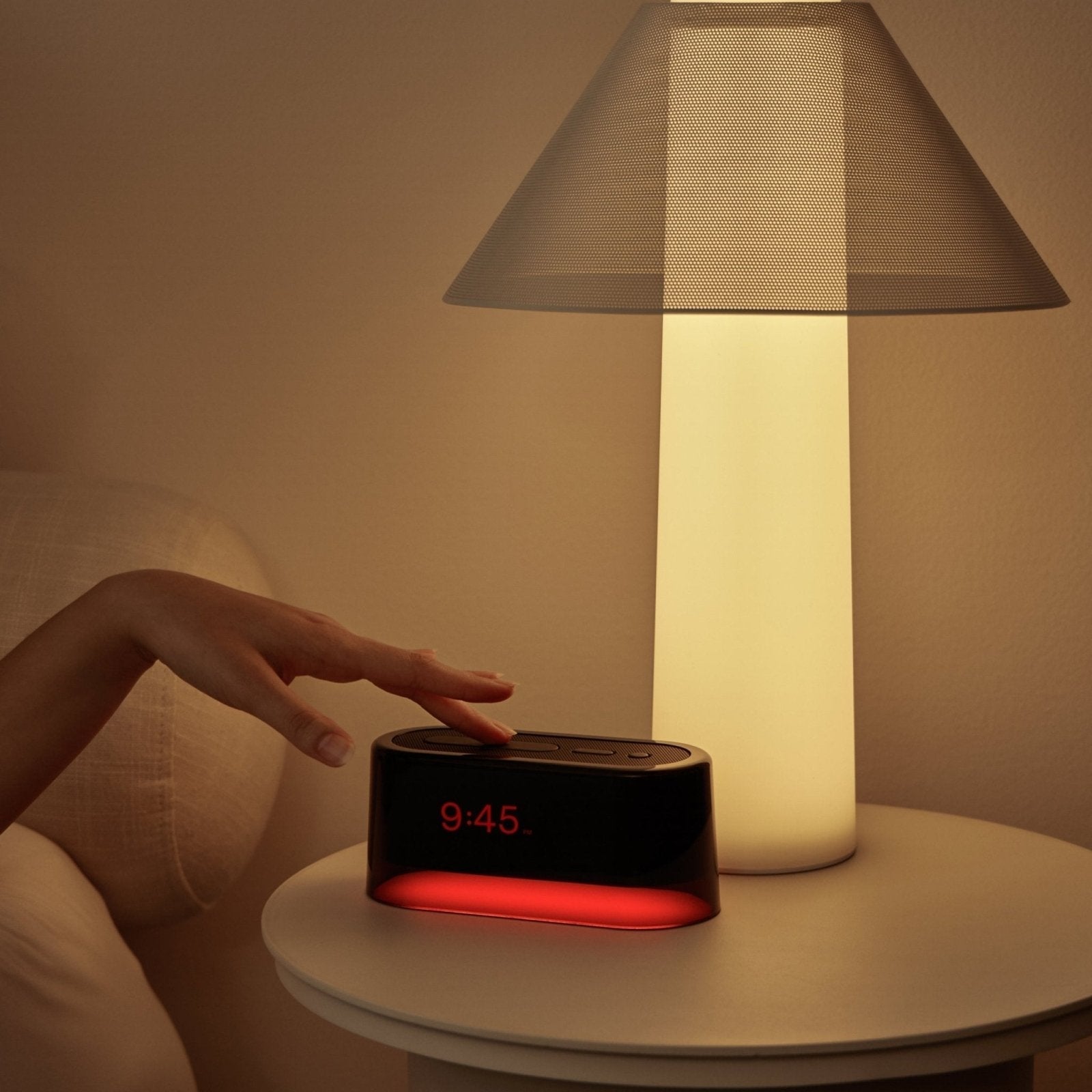
When you use the Loftie Lamp with the Loftie Clock, you're creating a full circadian-friendly sleep environment.
The clock handles sound (two-phase alarms, breathwork, white noise) and keeps your phone out of the bedroom. The lamp handles light (warm evenings, sunrise wake-ups). Together, they address the two most powerful signals for your circadian rhythm: light and sound.
It's not about adding more technology to your bedroom. It's about replacing disruptive technology (phones, harsh overhead lights) with intentional technology designed to support rest.
What People Notice After Switching
Here's what happens when you start using circadian-friendly lighting:
- Falling asleep faster (melatonin production isn't being suppressed)
- Feeling more relaxed in the evening (warm light signals rest mode)
- Waking up more naturally (gradual light mimics sunrise)
- Better energy during the day (circadian rhythm is more aligned)
- Less reliance on caffeine to wake up and melatonin supplements to sleep
It's not an overnight fix. Your circadian rhythm takes time to recalibrate. But most people notice a difference within a week or two of consistent use.
The Minimalist Design Bonus
Beyond the science, the Loftie Lamp just looks good. Clean lines, neutral tones, minimalist aesthetic. It's the kind of lamp that elevates your space instead of cluttering it. Form and function working together.
The Bottom Line
Your bedroom lighting matters more than you think. It's not just about being able to see. It's about sending the right signals to your brain at the right times.
Bright, blue-enriched light at night confuses your circadian rhythm and suppresses melatonin. Warm, dim light supports natural sleep cycles. The Loftie Lamp gives you both, exactly when you need them.
If you're struggling with sleep, feeling wired at night, or groggy in the morning, your lighting might be the missing piece. It's not about willpower. It's about working with your biology instead of fighting it.
Ready to optimize your sleep environment? Explore the Loftie collection and see what happens when you give your circadian rhythm the support it's been asking for.