Incense, Smudging, and Sacred Smoke: What Is the Difference?
Incense, smudging, and sacred smoke are terms that get used interchangeably, but they are not the same thing. They come from different traditions, use different materials, and serve different purposes. Understanding the distinction helps you choose the right practice and the right tools for what you actually want to do.
What Is Incense?

Incense is the broadest category. It refers to any aromatic material burned to release fragrant smoke, and it spans thousands of years and dozens of cultures. Japanese kodo, Indian agarbatti, Egyptian kyphi, and European church incense are all incense, and they are all quite different from each other.
In a modern home context, incense is typically used for atmosphere, mood, and ritual anchoring. It is not inherently spiritual or ceremonial, though it can be. It is simply a tool for changing the sensory quality of a space.
Calm Incense Sticks by Looshi are a good example of contemporary artisan incense: hand-rolled in Southern India, made from natural ingredients, and designed around a specific intention rather than a fragrance note.

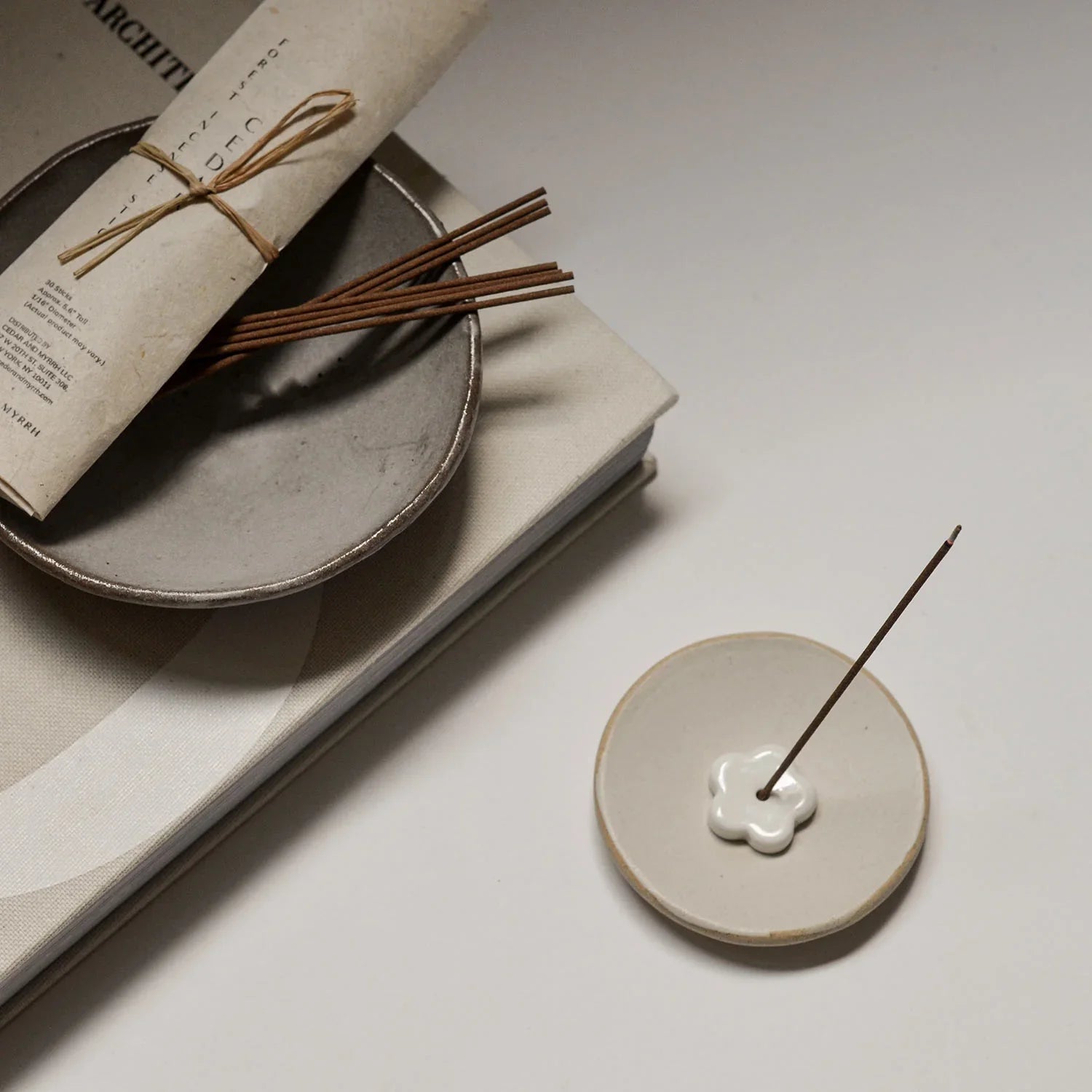
The Cedarwood Incense Stick Set from Cedar and Myrrh represents a different style: Japanese-influenced, thin, and producing a clean, refined smoke suited to quiet daily rituals.
What Is Smudging?

Smudging is a specific ceremonial practice originating in Indigenous North American traditions. It involves burning sacred plants, most commonly white sage, cedar, sweetgrass, or tobacco, and using the smoke intentionally to cleanse a person, object, or space.
It is important to approach smudging with awareness of its cultural origins. White sage in particular is a sacred plant in many Indigenous traditions, and its widespread commercial use has raised legitimate concerns about both cultural appropriation and overharvesting.
If you choose to smudge, do so with intention and source your materials responsibly. The Organic White Sage Smudge Stick from Cedar and Myrrh is certified organic and sustainably sourced.

The Pure Vibes Travel Smudging Kit from Yogo is a compact option for those who want to maintain a smudging practice while traveling, with everything needed in a portable format.
What Is Sacred Smoke?

Sacred smoke is a broader term that encompasses any intentional burning of aromatic materials for spiritual, ceremonial, or ritual purposes. It includes smudging but also extends to resin burning, Palo Santo, copal, frankincense, and other materials used across many different traditions worldwide.
Palo Santo, for example, is a sacred wood used in Andean healing traditions in South America. It is not smudging in the Indigenous North American sense, but it is sacred smoke in the broader meaning of the term. The Peruvian Palo Santo Sticks from Cedar and Myrrh are sustainably sourced from naturally fallen trees.

Black copal, burned in Mesoamerican ceremony for centuries, is another form of sacred smoke. The Black Copal Resin 75g from Cedar and Myrrh can be burned on a charcoal disc for a thick, purifying smoke with deep cultural roots.
Which Practice Is Right for You?
If you want to change the atmosphere of a room, anchor a daily ritual, or simply enjoy aromatic smoke, incense is the right starting point. It is accessible, varied, and carries no specific cultural obligations.
If you are drawn to the ceremonial dimension of smoke and want to engage with a specific tradition, research its origins and approach it with respect. Smudging and sacred smoke practices are meaningful precisely because they come from somewhere.
If you want to explore across all three, the Nanaka collection gives you the tools to do it thoughtfully. Start with Looshi incense sticks for daily ritual, add Palo Santo for clearing, and explore resin when you are ready for something deeper.
Frequently Asked Questions
What is the difference between incense and smudging?
Incense is a broad category of aromatic materials burned for fragrance, atmosphere, or ritual. Smudging is a specific ceremonial practice from Indigenous North American traditions involving the burning of sacred plants for spiritual cleansing.
Is Palo Santo the same as smudging?
No. Palo Santo comes from Andean healing traditions in South America and is a distinct practice from Indigenous North American smudging. Both involve burning sacred plant material intentionally, but they are separate traditions.
Is it cultural appropriation to burn white sage?
This is a nuanced question. White sage is a sacred plant in many Indigenous North American traditions, and its widespread commercial use has raised concerns. Approaching it with awareness, sourcing it responsibly, and understanding its origins is important if you choose to use it.
What is sacred smoke?
Sacred smoke is a broad term for any intentional burning of aromatic materials for spiritual or ceremonial purposes. It includes smudging, Palo Santo, resin burning, and other practices from many different cultural traditions.
Can I use incense for the same purpose as smudging?
You can use incense intentionally to clear a space, mark a transition, or create a ceremonial atmosphere. Whether that constitutes smudging depends on the tradition you are drawing from. Incense used with intention is a valid practice in its own right.