Radicales Libres y Estrés Oxidativo: Comprendiendo su Impacto en la Salud
¿Qué es el Estrés Oxidativo?
El estrés oxidativo representa un desequilibrio entre los radicales libres y los antioxidantes en su cuerpo, lo que puede llevar a daño celular y tisular. Una extensa evidencia científica indica que el estrés oxidativo crónico contribuye al desarrollo de numerosas condiciones, incluyendo cáncer, diabetes y enfermedades cardiovasculares.

Comprendiendo los Radicales Libres
El estrés oxidativo ocurre cuando los radicales libres y los antioxidantes existen en cantidades desproporcionadas. Las células de su cuerpo producen naturalmente radicales libres durante los procesos metabólicos normales. Simultáneamente, las células generan antioxidantes que neutralizan estos radicales libres. Generalmente, su cuerpo mantiene un equilibrio entre antioxidantes y radicales libres.
Múltiples factores contribuyen al estrés oxidativo y a la producción excesiva de radicales libres:
- Elecciones dietéticas y deficiencias nutricionales
- Hábitos de vida, incluyendo fumar y el consumo de alcohol
- Ciertas condiciones médicas e inflamación crónica
- Factores ambientales como la contaminación y la exposición a la radiación EMF
El estrés oxidativo descontrolado puede acelerar los procesos de envejecimiento y puede contribuir al desarrollo de numerosas condiciones de salud.
Los Variados Efectos del Estrés Oxidativo
Los efectos del estrés oxidativo varían considerablemente y no son universalmente dañinos. Por ejemplo, el estrés oxidativo resultante del ejercicio físico puede producir efectos reguladores beneficiosos en su cuerpo.
El estrés oxidativo leve puede incluso proteger su cuerpo de infecciones y enfermedades. En un estudio de investigación de 2015, los científicos descubrieron que el estrés oxidativo limitaba la propagación de células de cáncer de melanoma en ratones, demostrando posibles mecanismos protectores.
Sin embargo, el estrés oxidativo prolongado daña las estructuras celulares, las proteínas y el ADN. Este daño contribuye al envejecimiento acelerado y juega un papel significativo en el desarrollo de diversas condiciones crónicas.

Condiciones de Salud Vinculadas al Estrés Oxidativo
Comprender el equilibrio entre los radicales libres y los antioxidantes es esencial. Su cuerpo requiere ambos para un funcionamiento óptimo. Tener cantidades excesivas o insuficientes de cualquiera de ellos puede llevar a complicaciones de salud.
El estrés oxidativo crónico se ha asociado con:
- Enfermedades cardiovasculares y aterosclerosis
- Diabetes tipo 2 y síndrome metabólico
- Varias formas de cáncer
- Enfermedades neurodegenerativas, incluyendo Alzheimer y Parkinson
- Condiciones inflamatorias crónicas
- Envejecimiento acelerado y senescencia celular
Estrategias de Estilo de Vida para Reducir el Estrés Oxidativo
Las medidas de estilo de vida y dietéticas pueden ayudar a reducir el estrés oxidativo en su cuerpo:
Optimización Nutricional - Consuma una dieta equilibrada y rica en nutrientes, con abundancia de frutas y verduras que contengan antioxidantes naturales.
Limite los Alimentos Procesados - Reduzca la ingesta de alimentos procesados, particularmente aquellos ricos en azúcares refinados y grasas poco saludables.
Actividad Física Regular - Haga ejercicio regularmente para apoyar la producción de antioxidantes y la salud celular.
Elimine el Tabaquismo - Deje de fumar para reducir drásticamente la exposición a los radicales libres.
Manejo del Estrés - Implemente técnicas de reducción del estrés, incluyendo la meditación, el yoga o las prácticas de atención plena.
Protección Ambiental - Evite o minimice la exposición a la contaminación, productos químicos agresivos y radiación electromagnética.

El Papel del Peso Corporal en el Estrés Oxidativo
Mantener un peso corporal saludable puede ayudar a reducir el estrés oxidativo. Según una revisión sistemática de 2015, el exceso de células grasas produce sustancias inflamatorias que desencadenan una mayor actividad inflamatoria y producción de radicales libres en las células inmunes. Esto crea un ciclo en el que el exceso de peso promueve el estrés oxidativo, lo que a su vez puede hacer que el control del peso sea más desafiante.
Cómo Somavedic Ayuda a Reducir el Estrés Oxidativo
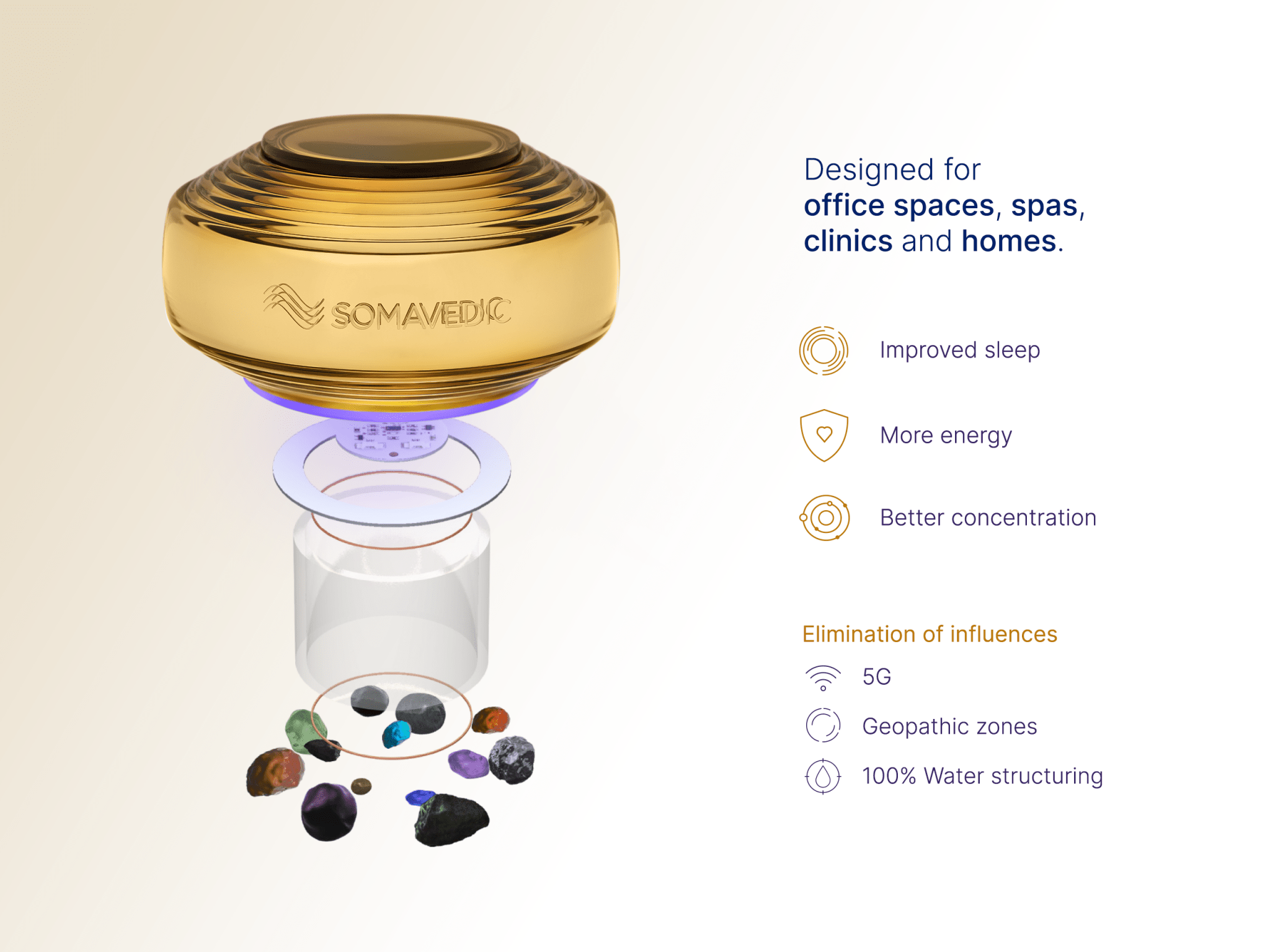
La tecnología Somavedic ayuda a neutralizar los estresores ambientales que contribuyen a la producción de radicales libres, particularmente la radiación electromagnética. Al crear un ambiente armonizado y reducir la exposición a los CEM, Somavedic apoya los sistemas antioxidantes naturales de su cuerpo.
Muchos usuarios reportan una reducción de la fatiga, mejora de los niveles de energía y un bienestar general mejorado después de introducir Somavedic en sus entornos. Estos beneficios se alinean con la reducción del estrés oxidativo y la mejora de la función celular.
Creando un Ambiente que Apoye la Salud Celular
Aunque no se pueden eliminar todas las fuentes de estrés oxidativo, se puede reducir significativamente la exposición a través de elecciones de estilo de vida conscientes y optimización ambiental. La combinación de estrategias nutricionales, ejercicio regular, manejo del estrés y armonización ambiental con la tecnología Somavedic crea una protección integral contra el daño excesivo de los radicales libres.
Sus células poseen una notable capacidad regenerativa cuando se les proporcionan condiciones óptimas. Apoyar esta resiliencia natural a través de la reducción del estrés oxidativo constituye la base de la salud y vitalidad a largo plazo.
Reduzca el estrés oxidativo, apoye la salud celular y proteja su cuerpo del daño de los radicales libres con estrategias de estilo de vida integrales y la armonización ambiental de Somavedic.